
No products in the cart.
Learning Center
Living with Lymphedema
Lymphedema is long-term swelling, most often in an arm or leg, caused when the lymphatic system can’t drain fluid properly. It can’t be cured, but with the right care it can be controlled. This guide explains the condition, the treatments doctors use, and how compression garments and pumps fit into daily life.
What is lymphedema?
Your lymphatic system is a network of vessels and nodes that carries a protein-rich fluid called lymph back into your bloodstream. When vessels or nodes are missing, damaged or blocked, that fluid collects in the tissue and causes swelling. Over time the trapped fluid can make the skin and tissue thicker and firmer, which is why early, steady care matters.
Types and causes
Primary lymphedema
Caused by lymph vessels that didn’t develop normally. It’s rare, and can show up at birth, around puberty or later in adult life.
Secondary lymphedema
The more common type. It’s caused by damage to the lymphatic system, most often from cancer surgery that removes lymph nodes, radiation treatment, or the cancer itself.
Other causes and risks
Injury, infection, poor vein function (chronic venous insufficiency), obesity and limited mobility can also overload or damage the lymphatic system.
Chronic venous insufficiency (CVI)
In CVI, the leg veins don’t return blood to the heart well, so fluid builds up in the lower legs. Over time this can cause swelling, skin changes and slow-healing wounds called venous stasis ulcers. CVI can also overload the lymphatic system. Compression is a core part of treatment. For ulcers that haven’t healed after months of standard care, a doctor may prescribe a compression pump.
Signs to watch for
✓ Swelling in part or all of an arm, leg, hand, foot, fingers or toes
✓ A heavy, full or achy feeling in the limb
✓ Skin that feels tight, or rings, watches, sleeves or shoes that suddenly fit snugly
✓ Less flexibility in a nearby joint, or skin that looks thicker
Call your doctor right away if a swollen area becomes red, hot or painful, or you develop a fever. These can be signs of an infection (cellulitis) that needs prompt treatment. New swelling should always be checked by a doctor, because other conditions can cause it too.
Stages of lymphedema
Doctors usually describe lymphedema in stages. Treatment works best when it starts early.
Stage 0
Hidden
No visible swelling yet, but the lymphatic system is affected. Some people notice heaviness or tightness.
Stage 1
Early
Swelling comes and goes and often goes down when the limb is raised. Pressing the skin may leave a dent.
Stage 2
Moderate
Swelling doesn’t go down with raising the limb, and tissue starts to feel firmer.
Stage 3
Advanced
Large, lasting swelling with skin changes such as thickening, folds or hardening.
How lymphedema is treated
The standard approach is complete decongestive therapy (CDT), usually led by a certified lymphedema therapist. It has two phases: first reducing the swelling, then keeping it down at home.
Manual lymph drainage
A gentle massage technique that moves fluid toward working lymph nodes.
Compression
Bandaging during the reduction phase, then fitted compression garments or wraps to hold the results.
Exercise
Specific movements that help muscles pump lymph out of the limb.
Skin and nail care
Keeping skin clean and moisturized to lower the risk of cracks and infection.
Pneumatic compression pumps
A home device with an inflatable garment that squeezes in sequence to move fluid. Doctors prescribe it as part of the plan; it doesn’t replace the other steps.
Daily care tips
Wear your garments as prescribed
Daytime garments during activity; nighttime garments or wraps if your therapist recommends them.
Protect your skin
Moisturize daily, treat small cuts quickly, and wear gloves for gardening or cleaning.
Keep moving
Regular, gentle activity helps lymph flow. Ask your therapist which exercises suit you.
Replace worn garments
Garments lose compression with wear and washing. Re-measure if your size changes.
Getting compression care through EzDME
Compression only works if it fits. Custom fitting is the center of what we do. We’re a medical equipment supplier focused on lymphedema, and we carry garments from medi, JOBST, L&R, Juzo, Alta Medical and Prairie Wear.
1
Referral or a call
Your doctor or lymphedema therapist sends an order, or you call us and we contact them.
2
Insurance check
We verify your benefits before anything is ordered and tell you what you’ll owe.
3
Measuring and fitting
A trained fitter measures you. If a standard size won’t fit well, we order custom garments made to your measurements.
4
Delivery and fit check
We check the fit when your garments arrive. If something isn’t right, we work with the manufacturer to fix it.
5
Replacements on schedule
We track when you’re eligible for new garments, so you aren’t left wearing worn-out compression.
How our products help
We supply the compression products your doctor or therapist prescribes, bill your insurance, and help you get the right fit.
 Daytime compression garmentsSleeves, gloves, stockings and garments from medi, JOBST, L&R, Juzo and more, to keep swelling down through the day.Shop garments →
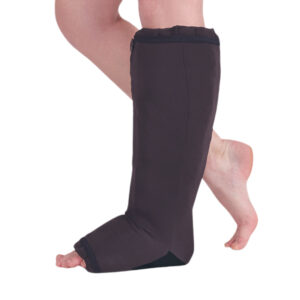 Nighttime garments & wrapsSofter, padded garments and adjustable wraps for overnight use and easier self-management.See nighttime options →
 Lymphedema pumpsAIROS and Bio Compression pumps for home therapy on your schedule, with setup help and training videos.See pumps →
 Post-surgery compression brasPrairie Wear bras and garments for chest and trunk swelling after breast surgery.See bras →
Insurance and Medicare
Compression garments
Since January 1, 2024, the Lymphedema Treatment Act has meant Medicare Part B covers prescribed lymphedema garments and wraps, standard or custom. Medicare allows up to 3 daytime garments per affected body part every 6 months and 2 nighttime garments every 2 years. It also replaces them sooner if your size changes, or if they’re lost or damaged beyond repair. You typically pay 20% after your deductible.
Compression pumps
Medicare covers a pump for lymphedema after a documented 4-week trial of compression garments or bandaging, exercise and raising the limb, if swelling or symptoms remain. For venous ulcers, the trial is 6 months of standard care. Advanced pumps with calibrated pressure (code E0652) need extra documentation and Medicare prior authorization. We prepare these with your doctor.
Private insurance
Many commercial and Medicare Advantage plans cover garments and pumps, often with prior authorization. We check your plan’s rules and handle the paperwork.
For doctors and lymphedema therapists
We work alongside therapists and fitters, and we know what Medicare and insurers look for. Pump orders get approved faster when the chart already includes:
Diagnosis and baseline
The lymphedema or CVI diagnosis, plus your own baseline measurements (such as limb circumferences) recorded before the trial.
The conservative trial
Dates and details of the trial: the garment or bandaging used, exercise, elevation, and how the patient responded.
Physician oversight
Signed notes from the treating practitioner, including agreement with any therapist evaluation, within the required time frame.
Why an advanced pump
For E0652, notes explaining why a basic pump isn’t enough (for example, swelling that extends into the trunk or chest).
If a request is denied, we review the denial with you and help prepare a corrected submission.
Common questions
Can lymphedema go away?
It’s a long-term condition, but swelling can often be reduced and kept under control with consistent treatment and compression.
Do I need a prescription for compression garments?
For insurance to pay, yes. Your doctor writes an order, and we handle the rest of the paperwork with your plan.
How often can I get new garments?
Under Medicare, up to 3 daytime garments per affected body part every 6 months and 2 nighttime garments every 2 years, plus replacements if your size changes. Private plans vary, and we’ll check yours.
What is the difference between custom and ready-made garments?
Ready-made (circular-knit) garments come in standard sizes and work well for many people. Custom (often flat-knit) garments are made to your exact measurements and are better for irregular limb shapes, skin folds or more advanced swelling. Your therapist and our fitter will recommend the right one.
Is a pump a substitute for garments?
No. A pump is used alongside garments, exercise and skin care, as part of the plan your doctor or therapist sets.
Trusted resources
Have questions about your swelling or coverage?
We’ll check your benefits and work with your doctor. There’s no obligation.
This guide is general education, not medical advice. Talk with your doctor or certified lymphedema therapist about your care.
- Centers for Medicare & Medicaid Services. Lymphedema Compression Treatment Items (effective January 1, 2024).
- American Occupational Therapy Association. New lymphedema benefit increases patient access, 2023.
- National Cancer Institute. Lymphedema (PDQ) — patient version.
- CMS / DME MACs. Pneumatic Compression Devices LCD (L33829) and NCD 280.6; Lymphedema compression treatment items FAQ.